Nevada's open roads attract thousands of motorcycle riders each year, but one wrong move can cost you more than just a ticket. In 2023 alone, Nevada recorded 67 motorcycle rider fatalities, with 88% of riders wearing helmets at the time of the crash, underscoring that even protected riders face serious risks on Nevada roadways.
If you've been injured in a motorcycle accident due to someone else's negligence, a Las Vegas motorcycle accident lawyer can help you understand your options and fight for the compensation you deserve. This guide covers everything Nevada riders need to know, from helmet laws to lane-splitting rules to what to do after a motorcycle accident.
Nevada Motorcycle Licensing Requirements
Before you legally operate a motorcycle in Nevada, you need the proper license. According to Nevada Revised Statutes Chapter 483, the state requires all motorcycle operators to hold a Class M license or a Class M motorcycle endorsement on their existing Nevada license.
How to Get a Motorcycle License in Nevada
Obtaining your motorcycle license in Nevada involves several steps, from getting your learner's permit to passing both written and skills tests. The Nevada Department of Motor Vehicles oversees this process to ensure all motorcycle riders meet safety standards.
Motorcycle instruction permit in Nevada: If you're just starting out, you can apply for a motorcycle instruction permit. This allows you to practice riding under certain restrictions, such as no passengers and no nighttime riding. You must be at least 16 years old to apply.
Nevada motorcycle permit test: To obtain your permit, you'll need to pass a written test covering Nevada motorcycle laws, traffic signs, and safe riding practices. The Nevada DMV provides study materials to help you prepare for the knowledge test.
Nevada rider training program: A Nevada motorcycle safety course is strongly recommended. Many public colleges offer approved classes that can waive your skills test and lower insurance costs. These courses teach core riding skills and defensive strategies.
Nevada motorcycle licensing age: You must be at least 16 to get a Nevada motorcycle license. Riders under 18 need parental consent, a state-approved safety course, and a DMV-verified practice log.
Nevada motorcycle endorsement: If you already have a standard or Class C license, you can add a motorcycle endorsement by passing the written and riding tests—no separate license required.
Required Documentation and Fees
When applying for your Nevada Class M license, bring proof of identity, your Social Security number, and proof of Nevada residency. You'll also need to pay the required fees, which vary depending on whether you're getting a new valid license or adding motorcycle endorsements to an existing one.
Nevada Motorcycle Helmet Law
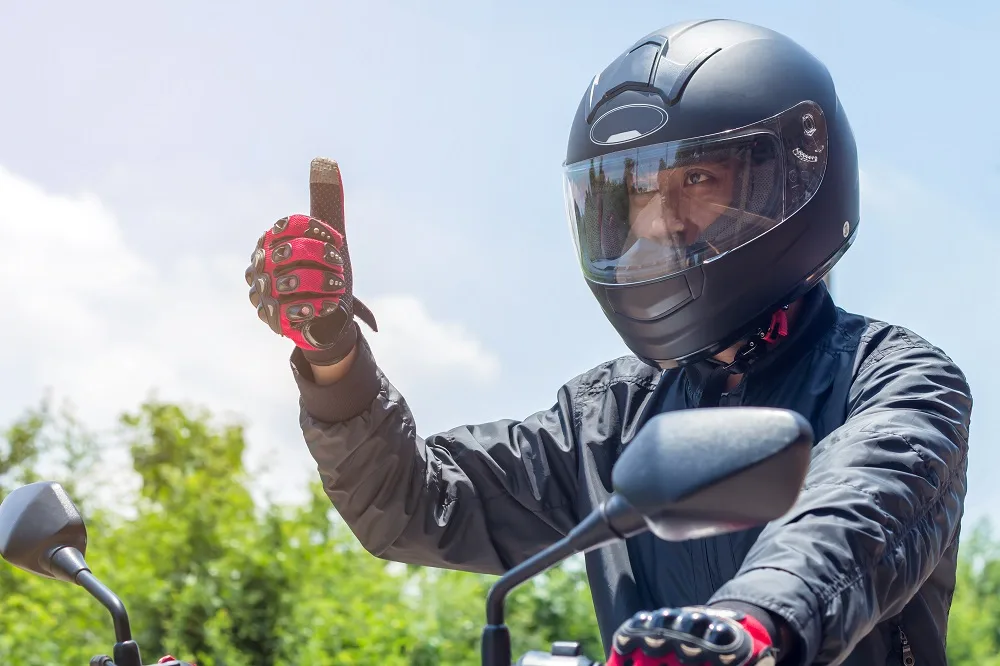
Nevada enforces strict helmet rules for all riders. The state’s universal helmet law requires every motorcycle operator and passenger to wear a DOT-approved helmet whenever the bike is moving. According to 2023 NHTSA data, 61 of Nevada’s 67 motorcycle fatalities involved helmeted riders, and eight were unhelmeted, showing that while helmets are vital, overall safety depends on many factors.
Nevada Helmet Requirement Details
Understanding what qualifies as legal protective equipment can save you from fines and strengthen your position if you're involved in motorcycle crash cases. Nevada's laws apply strict standards that go beyond just wearing any helmet.
DOT-approved helmets: Your helmet must meet U.S. Department of Transportation (DOT) safety standards. Look for the DOT sticker on the back of the helmet to ensure legal compliance with Nevada motorcycle laws.
Nevada helmet exemption: Unlike some states, Nevada does not offer exemptions based on age, experience, or insurance coverage. All motorcycle riders must wear helmets regardless of how long they've been riding.
Protective eyewear requirement: Unless your motor vehicle is equipped with a windscreen, you must also wear protective glasses or goggles, or a face shield. This protects your eyes from debris, wind, and insects that could impair your vision.
Important note: Wearing a non-DOT-approved helmet or riding without one can result in fines and may affect your ability to recover medical bills and compensation if you're involved in a serious accident.
Nevada Motorcycle Safety Tips
Beyond legal requirements, wearing proper protective gear can prevent traumatic brain injuries and save your life. Consider investing in:
Durable jacket and pants: Abrasion-resistant materials like leather or reinforced textile can protect your skin in a motorcycle crash.
Gloves: Full-finger gloves improve grip and protect your hands from road rash.
Boots: Sturdy, over-the-ankle boots provide ankle support and protection.
Reflective gear: Increases your visibility to other motor vehicles, especially at night.
Nevada Motorcycle Equipment Laws
Your motorcycle must meet specific safety standards to be street legal in Nevada. These requirements ensure your bike is visible and safe for both you and passenger vehicles sharing the road.
What Is Required for a Motorcycle to Be Street Legal?
Nevada law requires motorcycles manufactured for street use to have specific safety equipment installed and functioning properly before they can legally operate on public roads. Meeting these standards protects you from citations by a police officer and ensures your bike is as safe as possible.
Nevada motorcycle registration laws: All motorcycles must be registered with the Nevada DMV. You'll need proof of ownership, insurance, and a valid VIN to complete registration.
Headlamp requirements: Your motorcycle must have at least one working headlight that operates whenever the engine is running. Nevada law requires motorcycle daytime headlight use to increase visibility to other vehicles.
Brake requirements: Both front and rear brakes must be functional and capable of safely bringing the motorcycle to a complete stop.
Turn signals: Most motorcycles manufactured after 1973 must have working electric turn signal lamps. If your bike doesn't have them, you must use hand signals to indicate turns.
Mirrors: At least one rearview mirror is required, though two are recommended for better visibility.
Horn: A working horn is mandatory for signaling other vehicles in emergency situations.
Exhaust system: Nevada motorcycle laws prohibit excessively loud or modified exhaust systems that exceed state noise limits.
Fenders: Front and rear fenders are required to prevent debris from being thrown onto passenger vehicles.
Footrests: Passenger footrests must be installed if you plan to carry a passenger.
Rear reflector visible: Your motorcycle must have a rear reflector visible from at least 500 feet away to ensure visibility at night.
Before purchasing a used motorcycle or modifying your current one, verify that all equipment meets the state's motorcycle laws to avoid costly violations and ensure you can legally operate your bike.
Nevada Motorcycle Traffic Laws
Nevada motorcyclists must follow the same traffic laws as other motor vehicles, with a few specific rules that apply only to motorcycle drivers.
Lane Splitting in Nevada
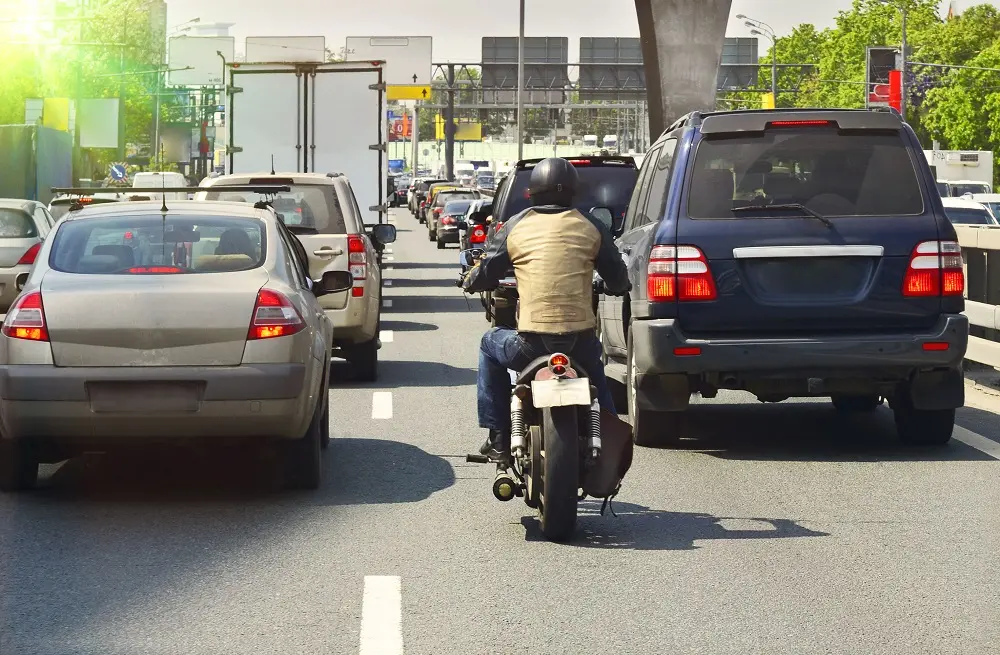
Lane splitting remains one of the most misunderstood aspects of Nevada motorcycle laws. Many riders coming from California or other states assume they can continue this practice, but Nevada takes a different approach. Is lane splitting legal in Nevada? No, lane sharing and lane splitting are illegal in Nevada, meaning you cannot ride between adjacent traffic lanes of slow-moving or stationary vehicles. Motorcycles must stay within a complete traffic lane at all times.
If you're in a crash while lane splitting in Nevada, you’ll likely be found entirely or partially at fault because the maneuver is illegal, which can limit your ability to recover compensation. Riders may use an entire lane and may ride side-by-side with another motorcycle, but not alongside cars or trucks. Passing must be done by moving into an adjacent lane, as passing within the same lane is prohibited and can lead to fines or liability in a collision.
What Is the Dead Red Law in Nevada?
The dead-red law allows motorcyclists to proceed through a red traffic light if the sensor fails to detect the motorcycle and the light doesn't change after a reasonable period (typically two complete signal cycles). You must come to a full stop, ensure it's safe to proceed, and yield to any cross traffic before moving through the intersection.
Nevada Motorcycle Passenger Laws
If you're carrying a passenger, your motorcycle must be equipped with a proper passenger seat and footrests. Both rider and passenger must wear helmets, and the passenger must remain seated and hold onto the rider or the motorcycle at all times.
Nevada Motorcycle Insurance Minimums
Nevada requires all motorcycle owners to carry liability insurance with minimum coverage of $25,000 per person for bodily injury, $50,000 per accident, and $20,000 for property damage. Uninsured motorist coverage is also recommended to protect you if a driver hits you without insurance. Contact your insurance company to ensure you have adequate protection beyond the state minimums.
Nevada Motorcycle Accident Laws
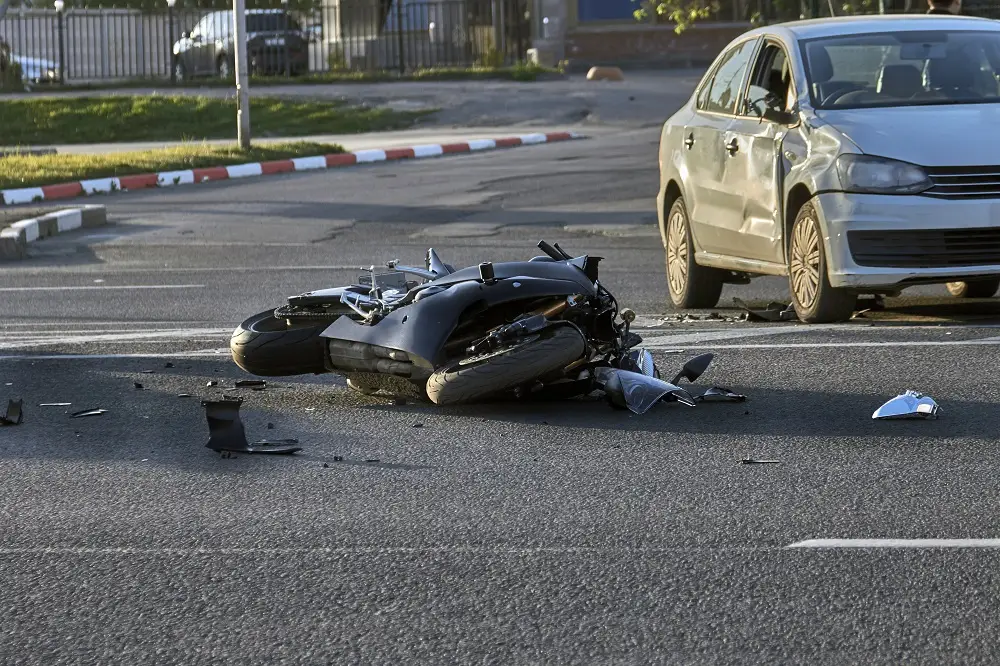
If you're involved in a motorcycle accident in Nevada, understanding your legal rights is crucial to protecting your interests and recovering compensation for your motorcycle injuries.
Nevada Comparative Negligence Motorcycle
Nevada follows a modified comparative negligence rule under NRS 41.141. This means you can still recover damages even if you're partially at fault for the accident, as long as you're less than 50% responsible. However, your compensation will be reduced by the percentage of fault you bear.
For example, if you're found 20% at fault for an accident and your total damages are $100,000, you can recover $80,000. If you're 51% or more at fault, you cannot recover any damages.
Motorcycle Injury Claims in Nevada
After motorcycle accidents, you may be entitled to compensation for:
Medical expenses: Hospital bills, surgeries, rehabilitation, and ongoing treatment costs.
Lost wages: Income lost due to time off work while recovering.
Property damage: Repair or replacement costs for your motorcycle and gear.
Pain and suffering: Compensation for physical pain, emotional distress, and reduced quality of life.
Loss of earning capacity: If your injuries prevent you from returning to your previous job or earning the same income.
Wrongful death: If a loved one was among the motorcyclists killed in a crash, surviving family members may pursue a wrongful death claim.
Important note: Nevada has a two-year statute of limitations for filing personal injury claims. This means you have two years from the date of the accident to file a lawsuit, or you may lose your right to seek compensation.
What to Do After a Motorcycle Accident in Nevada
After a motorcycle accident in Nevada, taking immediate steps can protect your health, your rights, and your future claim. The actions below help preserve crucial evidence and prevent insurance companies from using your statements against you.
Call 911: Report the accident and request medical assistance, even if you think your injuries are minor.
Document the scene: Take photos of the vehicles, road conditions, and your injuries. Collect contact information from witnesses.
Seek medical attention: Some injuries, like traumatic brain injuries, may not be immediately apparent. Getting checked out creates a medical record that can support your claim.
Contact a Las Vegas motorcycle accident lawyer: An experienced attorney can investigate the accident, negotiate with insurance companies, and fight for the compensation you deserve.
Important note: Avoid giving recorded statements to insurance adjusters without first consulting a lawyer. Insurance companies often use these statements to minimize or deny claims.
Protect Your Rights on Nevada Roads
Nevada's motorcycle laws are designed to keep riders safe and ensure everyone shares the road responsibly. From helmet requirements and equipment standards to lane splitting prohibitions and insurance minimums, understanding these regulations helps you avoid fines and strengthens your legal position if motorcycle accidents occur.
Cameron Law is a Las Vegas personal injury law firm with offices in Las Vegas and Reno, representing injured riders throughout Nevada. If you've been hurt in a motorcycle crash, we'll investigate your case, negotiate with insurance companies, and fight for the maximum compensation you deserve. Whether you were injured in a car accident, truck accident, or motorcycle collision, we're here to help. Contact us today for a free consultation.
We want to change the way people view lawyers, one relationship at a time. ®
Cameron Law represents injured motorcycle riders across Nevada. We understand the unique challenges you face and know how to hold negligent drivers accountable. Contact our team in Las Vegas or Reno for a free case evaluation.
Lorem ipsum dolor sit amet, consectetur adipiscing elit. Suspendisse varius enim in eros elementum tristique. Duis cursus, mi quis viverra ornare, eros dolor interdum nulla, ut commodo diam libero vitae erat. Aenean faucibus nibh et justo cursus id rutrum lorem imperdiet. Nunc ut sem vitae risus tristique posuere.
Average injury settlement ranges in Nevada explained by injury type, treatment level, and evidence, with guidance on how Cameron Law evaluates case value.
Facing a denied claim or insurer delay? Learn your rights under Nevada's duty to defend vs duty to indemnify. Contact Cameron Law for trusted guidance.
How safe are roller coasters? Learn about common injuries, liability, and your legal rights if you're hurt at an amusement park. Get a free consultation.
Discover whether truck drivers are responsible for damages in Las Vegas and how to prove liability. Get expert legal help from our truck accident lawyer today!
Get expert guidance on Las Vegas hotel injuries: learn documentation steps, reporting procedures, and how to protect your rights. Free case review available.
Discover essential steps after a Las Vegas car accident. Get expert legal advice, document tips from experienced accident attorneys. Free consultation 24/7!
Hospital fall compensation in Las Vegas: causes, liability, claims & damages. Get expert legal help for injuries in healthcare facilities. Free consultation!
Learn how insurance adjusters calculate settlement amounts for personal injury claims. Get expert guidance from Cameron Law to ensure fair compensation.
Learn about the “Eggshell Plaintiff” rule in personal injury law and how it affects cases with aggravated pre-existing conditions. Contact our Las Vegas lawyers today.
Discover the leading causes of pedestrian accidents, from speeding to jaywalking. Learn how Las Vegas pedestrian accident lawyers can help secure your rights.
Learn how slip and fall settlements are calculated, average payout amounts, and tips to maximize compensation. Consult our Las Vegas slip & fall lawyer today!
Learn about motorcycle injuries like road rash, head trauma, and broken bones. Discover how a Las Vegas lawyer can help with compensation after an accident.
Discover common causes of construction site accidents and injuries. Protect your rights — contact our attorney today for expert legal guidance and compensation.
Learn how to file a hot drink burn injury claim. Explore liability, damages, and how a Las Vegas burn injury lawyer can help you. Get a free consultation.
Learn about the most common rear-end collision injuries and how a Las Vegas rear-end accident attorney can help you secure fair compensation. Get in touch now!
Learn who is responsible for medical bills after a car accident in NV. Explore your options for compensation and contact our attorney for a free consultation.
Injured at a Las Vegas hotel? Learn how to sue for negligence, understand your rights, and seek compensation for damages. Contact a hotel accident attorney now!
Find out when trespassers can sue for injuries on private property. Learn about premises liability exceptions — contact our premises liability lawyer today.
Learn how to file a wrongful death lawsuit in Las Vegas and seek justice. Get guidance from experienced attorneys on pursuing fair compensation for your family.
Learn about common back injuries after a car accident, symptoms to watch for, and how to seek fair compensation. Get legal support with our car accident lawyer.
Learn how to prove a product liability case. Our product liability attorneys help injured consumers recover compensation. Contact us for a consultation today.
Drowning or near drowning is a scary experience that can have life-altering consequences. It is something that can happen to anyone, regardless of age or swimming ability. The causes of drowning and near drowning in a swimming pool can vary, but one crucial question people ask is, “Who is responsible?”
Explore Nevada’s lane-splitting laws, accident risks, and liability. Our Las Vegas car accident lawyers can help protect your rights after a road incident.
Learn about truck driver fatigue in Nevada. If you've been affected by an accident, contact our truck accident lawyer for a free consultation on your rights.
Learn about the factors that impact the timeline of personal injury cases in Nevada. Get expert guidance to navigate your claim and secure fair compensation.
Frustrated by an insurance claim denial? Learn why claims are denied and how to appeal. Get a free consultation with a Las Vegas personal injury lawyer today.
While most accidents are caused by drivers who are licensed and have insurance, some are caused by unlicensed drivers who may not have the financial means to pay for damages or injuries sustained in the accident. The thought of being involved in an accident with someone who is unlicensed can be scary, but it is not uncommon in Nevada, which is home to thousands of unlicensed drivers.
Navigate your traumatic brain injury lawsuit and secure the compensation you deserve. Get expert guidance on TBI claims, damages, and legal steps. Reach out now!
Learn about wrongful death timelines and factors influencing the statute of limitations. Contact our Las Vegas wrongful death attorney for compensation.
Discover common dog bite complications, how to assess bite severity, and steps to take. Contact our Las Vegas dog bite attorney for a free consultation today.
Navigate the legal intricacies of post-pursuit car accidents. Gain insight into liability, policy frameworks, and recoverable damages. Get a consultation today!
Explore structured settlements for financial stability through reliable income streams, perfect for personal injury and wrongful death cases. Consult with us now!
Discover essential questions to ask when choosing a personal injury lawyer. Ensure you hire the right attorney for your case with Cameron Law’s expert guidance.
Learn about CTE in young athletes, its risks, and how a Las Vegas brain injury lawyer can help you seek compensation for sports-related brain injuries.
Explore Nevada ride-sharing accident laws, including regulations, insurance requirements. Reach out to our Las Vegas ride-sharing accident lawyer for consultation today!
Are you confused about Nevada's motorcycle helmet laws? This blog post will provide a comprehensive overview of the regulations, including requirements for motorcycle drivers and passengers, potential penalties for non-compliance, strategies for contesting citations and much more. Whether you're a seasoned rider or just getting started, this blog will equip you with the knowledge to navigate Nevada's helmet laws and prioritize your safety on the road. If you need urgent assistance from the well-qualified Las Vegas motorcycle accident lawyer, call Cameron Law at 702-745-4545.